









mai
17,
2025
Get glowing skin after a peel! Discover essential tips for hydrating, protecting, and enhancing your skin while extending the results.


The cosmetics and aesthetics expert, for professionals and individuals
mai
17,
2025
Get glowing skin after a peel! Discover essential tips for hydrating, protecting, and enhancing your skin while extending the results.
mai
03,
2025
Discover enzymatic peeling, the gentle exfoliation ideal for sensitive skin. Hydrate, brighten, and refine your complexion with this innovative ...
avril
25,
2025
Discover scalp mesotherapy, an innovative solution to slow down hair loss, stimulate hair regrowth, and revitalize the scalp.
avril
21,
2025
Discover the benefits of glycolic peeling for radiant skin! Combat acne, fade scars, and revive your complexion with this powerful treatment.
avril
18,
2025
Discover the differences between chemical and mechanical peels: advantages, limitations, and tips for choosing the best technique adapted to your ...
avril
16,
2025
Prepare your skin before a cosmetic injection for optimal and long-lasting results. Discover expert advice, key steps, and suitable products!
avril
15,
2025
Discover the latest innovations in peeling for radiant and healthy skin: natural enzymes, fractional lasers, and nanotechnology. Enhance your beauty!
avril
12,
2025
Discover everything about hyaluronic acid: its benefits for hydration and anti-aging, the types of products available, and how to choose the one ...
avril
11,
2025
Discover the secrets of mesotherapy: an innovative technique for skin rejuvenation, cellulite reduction, and hair treatment. Myth or reality?
avril
10,
2025
Discover the key steps to optimize recovery after a peel: hydration, sun protection, and personalized care for glowing and soothed skin.
avril
07,
2025
Discover the secrets of peeling for radiant and rejuvenated skin. Types, benefits, precautions, and advice for long-lasting and personalized results!
mars
24,
2025
Are you hesitating between a chemical peel and a superficial laser treatment to improve the appearance of your skin? Discover the advantages of ...
févr.
28,
2025
Capillary mesotherapy is an innovative solution to slow down hair loss and stimulate hair growth. Through injections of vitamins and hyaluronic ...
févr.
27,
2025
Are you hesitating between a chemical peel and microneedling to improve your skin? These two aesthetic treatments each have their own ...
févr.
27,
2025
Exosomes and plant stem cells are transforming cosmetics in 2025: skincare products that can naturally boost collagen production (+33% in 6 weeks) ...
févr.
24,
2025
Stretch marks affect nearly 80% of adults and result from rapid stretching of the skin. Although they are common, there are effective ways to ...
févr.
21,
2025
Mesotherapy, invented in France more than 70 years ago, revolutionizes the management of joint pain and aesthetic care through targeted ...
févr.
20,
2025
Discover the true benefits of hyaluronic acid for hydration, skin youthfulness, joint health, and wound healing. Scientific studies and practical ...

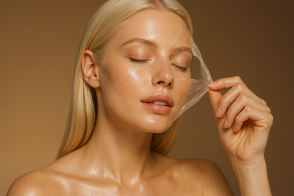
A radiant, even, and rejuvenated skin is now within everyone's reach, thanks to advances in dermatology such as peeling, a controlled exfoliation method that reveals glowing skin while addressing targeted issues like acne, scars, or dull complexion. This flexible technique allows treatments to be tailored to individual needs, ensuring personalized and long-lasting results.
However, it is crucial to note that not all peels are created equal. Whether they are chemical, mechanical, or enzymatic, the choice of method should be made carefully based on your skin type, expectations, and desired results. Thorough preparation and appropriate post-treatment care are essential to maximize the benefits while avoiding potential discomfort.
In this article, we will explore all the essential aspects of peeling: the different types, their benefits, the precautions to be taken, and practical tips for a successful and safe experience.
To make the most of a peel, it is essential to understand its variations. Each type of peel has specific intensity and mode of action, tailored to different goals and skin types.
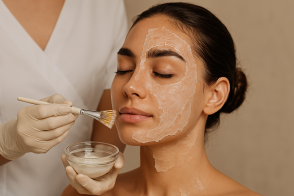
Superficial peeling acts exclusively on the epidermis, the outer layer of the skin, using light exfoliating agents such as glycolic acid, lactic acid, or natural enzymes.
Medium-depth chemical peels penetrate the dermis, the middle layer of the skin, to treat more pronounced issues using powerful ingredients such as trichloroacetic acid (TCA).
For spectacular results, deep peeling works deeply with agents such as phenol.
Although all these peels offer specific benefits, their choice should primarily be guided by a professional, taking into account your skin type and the expected results.
The peeling eliminates dead cells, smoothes the skin's surface, reduces enlarged pores, and refines the skin texture. These effects are particularly pronounced with medium and deep peels.
By reducing pigmentation irregularities and dull complexion, peeling is ideal after prolonged sun exposure. Acid peels, such as kojic acid, effectively correct brown spots, restoring brightness and uniformity to the complexion.
By penetrating into the deeper layers of the skin, medium and deep peels stimulate the natural production of collagen, which firms the skin and permanently reduces signs of aging.
Specialized peels made with salicylic acid or retinoids effectively treat acne and scars resulting from inflammation. They also clean the pores to prevent new acne breakouts.
By combining these numerous benefits, peeling not only provides a younger and radiant skin, but also a lasting boost in self-confidence.
A preliminary diagnosis is essential because it allows:
Several measures must be followed before a chemical peel:
Do not touch the dead skin patches. Gentle hydration promotes regular exfoliation without the risk of scarring.
For any medium or deep chemical peel, a follow-up consultation is necessary to ensure that the recovery is progressing normally.
Peeling, whether it is a simple exfoliation or a deep treatment, is an essential method to enhance your skin. With careful preparation, an informed choice between superficial, medium, or deep treatment, and rigorous post-intervention care, it is possible to achieve impressive results safely.
Investing in a chemical peel is an investment in a youthful and radiant appearance, as well as a boost in self-confidence. Make this practice a cornerstone of your skincare routine while remaining attentive to expert advice to ensure lasting and satisfying results. To take your quest for glowing skin even further, discover the Mesoestetic Mesopeel Modified Jessner, a professional chemical peel that offers a solution tailored to a multitude of skin issues, while enhancing your natural radiance.







Comments : 0