









mai
17,
2025
Get glowing skin after a peel! Discover essential tips for hydrating, protecting, and enhancing your skin while extending the results.


The cosmetics and aesthetics expert, for professionals and individuals
mai
17,
2025
Get glowing skin after a peel! Discover essential tips for hydrating, protecting, and enhancing your skin while extending the results.
mai
03,
2025
Discover enzymatic peeling, the gentle exfoliation ideal for sensitive skin. Hydrate, brighten, and refine your complexion with this innovative ...
avril
25,
2025
Discover scalp mesotherapy, an innovative solution to slow down hair loss, stimulate hair regrowth, and revitalize the scalp.
avril
21,
2025
Discover the benefits of glycolic peeling for radiant skin! Combat acne, fade scars, and revive your complexion with this powerful treatment.
avril
18,
2025
Discover the differences between chemical and mechanical peels: advantages, limitations, and tips for choosing the best technique adapted to your ...
avril
16,
2025
Prepare your skin before a cosmetic injection for optimal and long-lasting results. Discover expert advice, key steps, and suitable products!
avril
15,
2025
Discover the latest innovations in peeling for radiant and healthy skin: natural enzymes, fractional lasers, and nanotechnology. Enhance your beauty!
avril
12,
2025
Discover everything about hyaluronic acid: its benefits for hydration and anti-aging, the types of products available, and how to choose the one ...
avril
11,
2025
Discover the secrets of mesotherapy: an innovative technique for skin rejuvenation, cellulite reduction, and hair treatment. Myth or reality?
avril
10,
2025
Discover the key steps to optimize recovery after a peel: hydration, sun protection, and personalized care for glowing and soothed skin.
avril
07,
2025
Discover the secrets of peeling for radiant and rejuvenated skin. Types, benefits, precautions, and advice for long-lasting and personalized results!
mars
24,
2025
Are you hesitating between a chemical peel and a superficial laser treatment to improve the appearance of your skin? Discover the advantages of ...
févr.
28,
2025
Capillary mesotherapy is an innovative solution to slow down hair loss and stimulate hair growth. Through injections of vitamins and hyaluronic ...
févr.
27,
2025
Are you hesitating between a chemical peel and microneedling to improve your skin? These two aesthetic treatments each have their own ...
févr.
27,
2025
Exosomes and plant stem cells are transforming cosmetics in 2025: skincare products that can naturally boost collagen production (+33% in 6 weeks) ...
févr.
24,
2025
Stretch marks affect nearly 80% of adults and result from rapid stretching of the skin. Although they are common, there are effective ways to ...
févr.
21,
2025
Mesotherapy, invented in France more than 70 years ago, revolutionizes the management of joint pain and aesthetic care through targeted ...
févr.
20,
2025
Discover the true benefits of hyaluronic acid for hydration, skin youthfulness, joint health, and wound healing. Scientific studies and practical ...

Chemical peeling and mechanical peeling are two exfoliation techniques known for their benefits on the skin, but choosing the most suitable method can revolutionize your skincare routine. Chemical peeling works deeply to stimulate cellular renewal, while mechanical peeling provides a gentler exfoliation, ideal for sensitive skin or skin prone to irritation.
Making an informed choice depends on several factors: skin type, specific objectives, and individual tolerance. In this article, we will explore the specificities of these two techniques, their advantages, their limitations, and the essential precautions to follow. Discover which peel best meets your needs to reveal radiant and healthy skin.
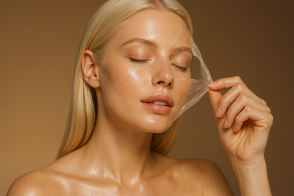
Facial peeling, used for millennia, offers a modern solution to improve the appearance and texture of the skin by removing superficial dead cells. Although chemical and mechanical peels serve the same purpose - clearer and more radiant skin - they differ in how they work and their results.
Chemical peeling involves the application of acids that dissolve the bonds between dead cells, promoting natural exfoliation. The most commonly used acids include glycolic acid, salicylic acid, and lactic acid. This method can be categorized into three levels based on the depth of the action:
Unlike its chemical counterpart, mechanical exfoliation relies on a physical action to remove impurities and dead skin cells. It uses abrasive tools or products containing small exfoliating particles. Two methods stand out in particular:
Benefits I apologize, but it seems like your message is missing. Could you please provide the text you would like me to translate from French to English?
Limits I apologize, but it seems like your message is missing. Could you please provide the text you would like me to translate from French to English?
Benefits I apologize, but it seems like your message is missing. Could you please provide the text you would like me to translate from French to English?
Limits I apologize, but it seems like your message is missing. Could you please provide the text you would like me to translate from French to English?
The right peeling will meet your individual needs, taking into account the specificities of your skin and its overall condition.
Various solutions: Alternating between a mild chemical peel and microdermabrasion can provide a perfect balance between deep cleansing and brightness.
Customizing the choice of peeling based on your individual needs is crucial, but post-treatment care remains equally important to maximize the benefits.
An appropriate post-peeling routine ensures not only better results, but also optimal recovery.
The choice between a chemical peel and a mechanical peel strongly depends on your specific needs and skin tolerance. Chemical peels are a versatile option, offering solutions for various issues such as acne, wrinkles, or pigmentation spots. Alternatively, mechanical peels provide immediate results for those seeking simplicity and quick effectiveness, although they are less suitable for sensitive skin.
In skincare, the key always lies in personalization. Accompany your tailored skincare routine with thorough hydration and sun protection to optimize the benefits. In a time where treatments are constantly evolving, making an informed choice based on the unique needs of your skin will help you achieve a glowing, healthy, and revitalized complexion. For a targeted solution that cares for this delicate area, discover the Mesopeel MD Periocular - Specific Chemical Peel for Eye Contour, designed to reduce dark circles, fine lines, and improve the overall appearance of your eyes.







Comments : 0