









mai
17,
2025
Get glowing skin after a peel! Discover essential tips for hydrating, protecting, and enhancing your skin while extending the results.


The cosmetics and aesthetics expert, for professionals and individuals
mai
17,
2025
Get glowing skin after a peel! Discover essential tips for hydrating, protecting, and enhancing your skin while extending the results.
mai
03,
2025
Discover enzymatic peeling, the gentle exfoliation ideal for sensitive skin. Hydrate, brighten, and refine your complexion with this innovative ...
avril
25,
2025
Discover scalp mesotherapy, an innovative solution to slow down hair loss, stimulate hair regrowth, and revitalize the scalp.
avril
21,
2025
Discover the benefits of glycolic peeling for radiant skin! Combat acne, fade scars, and revive your complexion with this powerful treatment.
avril
18,
2025
Discover the differences between chemical and mechanical peels: advantages, limitations, and tips for choosing the best technique adapted to your ...
avril
16,
2025
Prepare your skin before a cosmetic injection for optimal and long-lasting results. Discover expert advice, key steps, and suitable products!
avril
15,
2025
Discover the latest innovations in peeling for radiant and healthy skin: natural enzymes, fractional lasers, and nanotechnology. Enhance your beauty!
avril
12,
2025
Discover everything about hyaluronic acid: its benefits for hydration and anti-aging, the types of products available, and how to choose the one ...
avril
11,
2025
Discover the secrets of mesotherapy: an innovative technique for skin rejuvenation, cellulite reduction, and hair treatment. Myth or reality?
avril
10,
2025
Discover the key steps to optimize recovery after a peel: hydration, sun protection, and personalized care for glowing and soothed skin.
avril
07,
2025
Discover the secrets of peeling for radiant and rejuvenated skin. Types, benefits, precautions, and advice for long-lasting and personalized results!
mars
24,
2025
Are you hesitating between a chemical peel and a superficial laser treatment to improve the appearance of your skin? Discover the advantages of ...
févr.
28,
2025
Capillary mesotherapy is an innovative solution to slow down hair loss and stimulate hair growth. Through injections of vitamins and hyaluronic ...
févr.
27,
2025
Are you hesitating between a chemical peel and microneedling to improve your skin? These two aesthetic treatments each have their own ...
févr.
27,
2025
Exosomes and plant stem cells are transforming cosmetics in 2025: skincare products that can naturally boost collagen production (+33% in 6 weeks) ...
févr.
24,
2025
Stretch marks affect nearly 80% of adults and result from rapid stretching of the skin. Although they are common, there are effective ways to ...
févr.
21,
2025
Mesotherapy, invented in France more than 70 years ago, revolutionizes the management of joint pain and aesthetic care through targeted ...
févr.
20,
2025
Discover the true benefits of hyaluronic acid for hydration, skin youthfulness, joint health, and wound healing. Scientific studies and practical ...

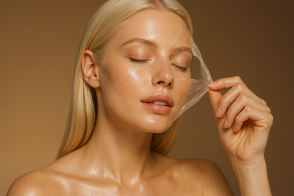
Imagine a treatment capable of gently exfoliating your skin, revealing its natural radiance without causing irritation. This is exactly what enzymatic peeling offers, an innovative method that stands out for its ability to care for even the most sensitive skin. Unlike mechanical scrubs or sometimes harsh chemical peels, this technique relies on the action of enzymes to gently remove dead cells and refine the skin texture.
Enzymatic peeling goes beyond exfoliation; it also prepares your skin to better absorb your moisturizing and nourishing treatments, making your beauty routine more effective. Whether your goal is radiant skin or a more minimalist routine, this universal approach easily adapts to all skin types.
Let's dive into the secrets of this unique method, its benefits, and practical tips to integrate it into your daily routine in an optimal way.
The enzymatic peeling is a gentle exfoliation method that relies on natural enzymes to remove dead skin cells from the epidermis. These enzymes, often derived from fruits such as papaya (papain) or pineapple (bromelain), gently dissolve the proteins that hold dead cells on the surface, leaving the skin smooth and radiant without aggression.
Unlike mechanical exfoliation methods that use abrasive particles or chemical peels that employ acids like glycolic acid, enzymatic peeling stands out for its gentleness. This method does not cause micro-tears or disrupt the skin's pH balance, making it a perfectly suitable alternative for sensitive or reactive skin.
The secret lies in enzymes, referred to as "biological scissors". These hydrolytic proteins exclusively target the protein bonds of dead cells, without altering healthy tissues or disrupting the skin's natural barrier. Here are its main mechanisms:
This precise and respectful approach is ideal for delicate areas such as the face and during periods when the skin is weakened, for example, after a dermatological treatment.
One of the main advantages of enzymatic peeling is its exceptional tolerance, making it perfect for sensitive skin. By removing dead cells while respecting the integrity of the skin barrier, it provides gentle yet effective exfoliation.
Thanks to its gentle properties, it is perfectly suitable for people suffering from conditions such as rosacea, eczema, or sensitive skin.
Enzymatic peeling therefore offers an ideal alternative, allowing you to enjoy the benefits of exfoliation without the unwanted effects.
To make the most of an enzymatic peel, it is essential to adopt the correct usage and a suitable frequency. Here's how to intelligently incorporate it into your beauty routine.
Respecting these steps ensures visible results without compromising the balance of your skin.
The benefits of enzymatic peeling are felt from the first applications, and user feedback confirms its effectiveness.
A study conducted by a specialized dermatological brand tested a peeling enriched with papain and aloe vera. After eight weeks of use, 78% of users noted an increase in the brightness of their skin, while 65% observed a decrease in redness. These results highlight the expertise of this gentle yet effective method.
Enzymatic peeling is positioned as a revolutionary treatment for those seeking gentle, natural, and effective exfoliation. Thanks to its natural enzymes such as papain or bromelain, it removes dead cells without aggressing the skin's protective barrier.
Perfectly suited for fragile and sensitive skin, this treatment provides radiance, softness, and evenness to the complexion, while respecting the skin's balance requirements. By incorporating this method into your beauty routine, you are investing in a sustainable care process that enhances your skin while preserving its health.
In a world where the search for gentle and effective solutions is essential, enzymatic peeling has become a key reference. To further advance in your quest for radiant skin tone, discover [it]. Mesoestetic Mesopeel Glycolic 50%, a professional chemical peel designed to reveal the full beauty of your skin. Try it and discover a new way to take care of your skin, gently and without compromise.







Comments : 0